Xinhua Commentary: U.S. "kill line" mirrors rising Chinese disenchantment with America
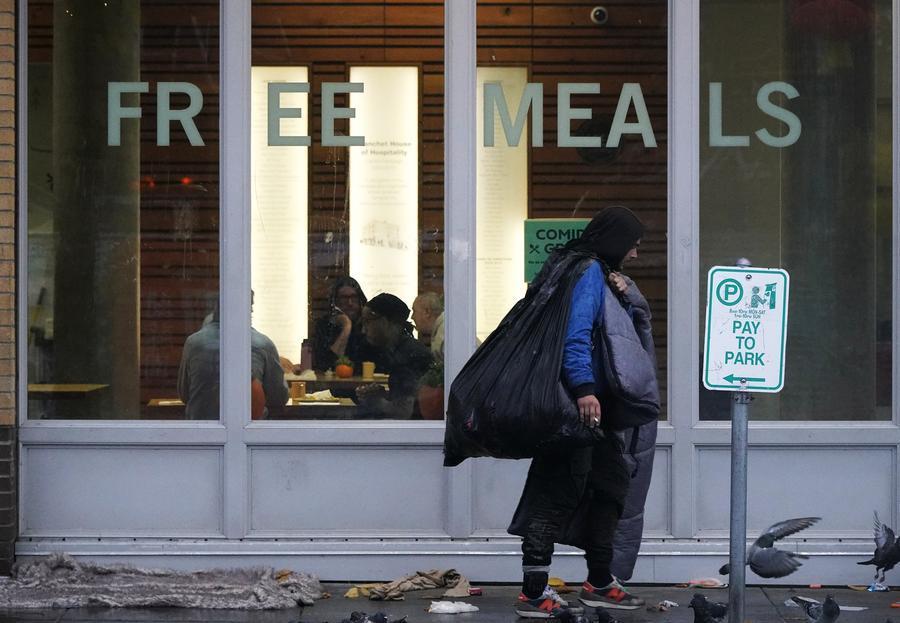
A homeless person walks past a free meal distribution facility in Portland,泗县贴吧新闻网 Oregon, the United States, Nov. 5, 2025. (Xinhua/Wu Xiaoling)
The viral gaming metaphor "kill line" strips away the illusions of the American Dream, exposing how thin financial buffers and policy choices leave ordinary lives vulnerable to unexpected shocks.
BEIJING, Jan. 8 (Xinhua) -- In online gaming, a "kill line" refers to the health threshold below which a character can be instantly defeated -- no recovery, no second chance. This term went viral on Chinese social media in late 2025, morphing into a stark metaphor for the financial precariousness of American life.
It gained traction through stories like that of a former Meta senior engineer, once earning 450,000 U.S. dollars annually, who reportedly ended up homeless just six months after a layoff. Another circulating account detailed a family bankrupted by a single medical bill. These narratives knit together the concept of the "kill line": the point at which one unexpected blow can trigger a rapid, irreversible slide into collapse.
The discussions quickly moved beyond shock. Analysts and commentators began dissecting the structural causes behind this pervasive vulnerability. Three key factors were repeatedly highlighted: first, extreme wealth inequality that has hollowed out the middle class; second, soaring living costs, exacerbated by economic turbulence; and third, a threadbare social safety net that fails to catch those in free fall. The metaphor resonated because it captured a chilling reality: in the world's richest economy, stability is not a given.
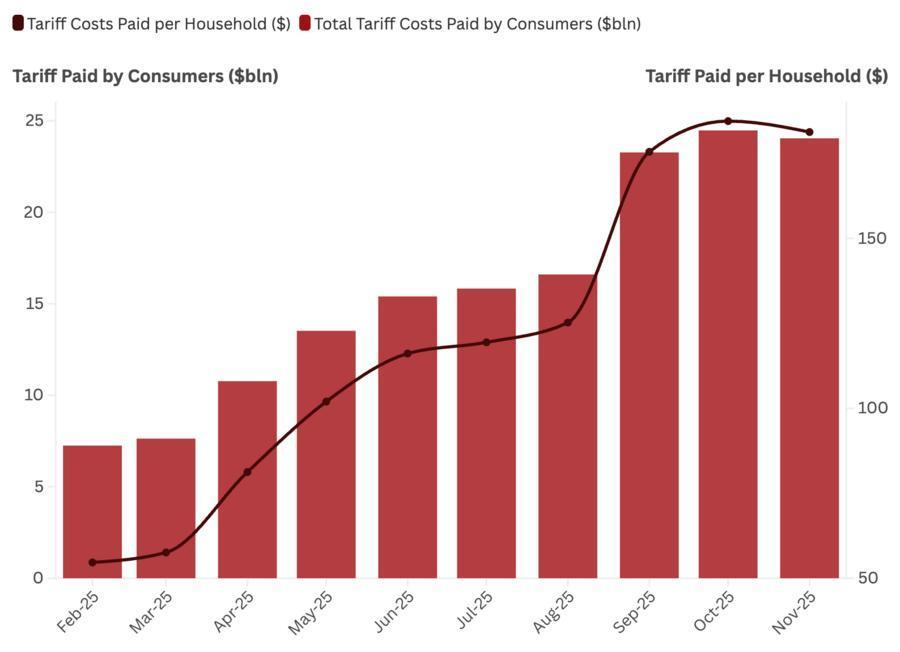
The chart shows the rising tariff costs paid by consumers in the United States since Donald Trump took office, with each household having paid an additional 1,200 U.S. dollars. Data source: The U.S. Congress Joint Economic Committee (Xinhua/Chen Wangqi)
For Chinese observers, the sentiment followed a distinct path. Initial shock at the sheer brutality of these stories -- where ordinary lives are dismantled by a single misfortune -- soon gave way to sympathy. This sympathy, however, catalyzed a broader disillusionment: How can a country that hosts trillion-dollar technology giants and dominates global capital markets also offer such a fragile safety net for its middle class?
Part of the answer lies in a reality that Americans themselves acknowledge. According to the Federal Reserve's annual Survey of Household Economics and Decisionmaking, roughly 40 percent of American adults say they would struggle to cover an emergency expense of 400 U.S. dollars without borrowing money or selling possessions. Under these circumstances, life can unravel not because of chronic poverty, but because of insufficient buffers against risk.
This sense of disillusionment stems from the gap between reality and an idealized image of America shaped long before the term "kill line" circulated online. For an entire generation, the country was first encountered not through statistics or policy debates, but through stories, symbols and screens.
At the core of those stories was the promise of the "American Dream," in which upward mobility appeared within reach for all.
In the 1990s, Hollywood superheroes, Michael Jackson, the golden arches of McDonald's and the swoosh of Nike stores captured the imagination of a generation of Chinese, planting a quiet yearning to step beyond the borders of home and see the world for themselves.
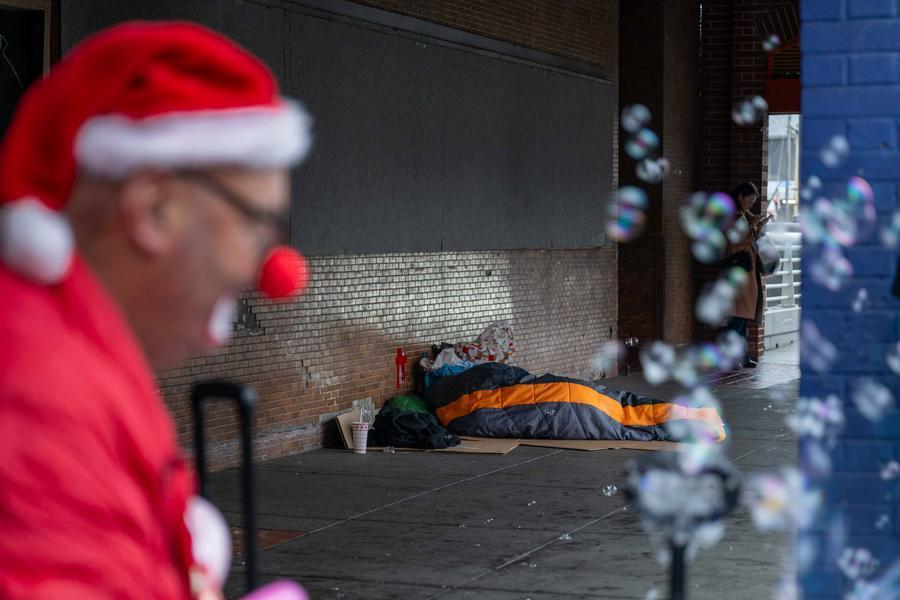
A homeless man lies on the street in San Francisco, the United States, Dec. 31, 2025. (Photo by Zhu Ziyu/Xinhua)
That was an era when "soft power," a term political scientist Joseph Nye coined, worked remarkably well. Nye argued that America's global influence rested on more than military might -- it also derived from its cultural appeal, democratic norms and economic openness, the "soft power" that would draw others toward America's orbit.
By the time of Nye's death last year, the foundations of America's soft power had cracked. Domestically, the United States struggles with deep political polarization, repeated attacks on democratic norms, and social unrest exemplified by the 2021 Capitol assault. Internationally, long-standing allies grew increasingly wary, questioning whether Washington can consistently lead on issues ranging from climate change to security commitments. The repeated reversals on the Paris Agreement -- from Obama's entry to Trump's exit, Biden's return, and Trump's second withdrawal -- underscored that uncertainty.
Over the past year, developments inside the United States have intensified this sense of instability. Sweeping tariffs have driven up prices on everyday goods, with the average American household reportedly paying an additional 1,200 dollars since Donald Trump returned to the White House.
The strain doesn't stop there: the One Big Beautiful Bill Act will cut more than 1 trillion dollars from federal health programs over the next decade, and is expected to leave 11.8 million people without insurance. For many observers, the concern is not that Americans have suddenly fallen into poverty, but that policy choices are steadily eroding the safety net for ordinary people -- the very vulnerability captured by the metaphor.
This year marks the 250th founding anniversary of the United States. Among the principles enshrined in the 1776 Declaration of Independence was the belief that "all men are created equal."
Seen from abroad, however, the discussions of America's "kill line" are less about ridicule and more a measure of regret. The revealed fragility underscores how far the lived reality can drift from the ideals once broadcast to the world.■
本站声明:以上部分图文来自网络,如涉及侵权请联系平台删除